
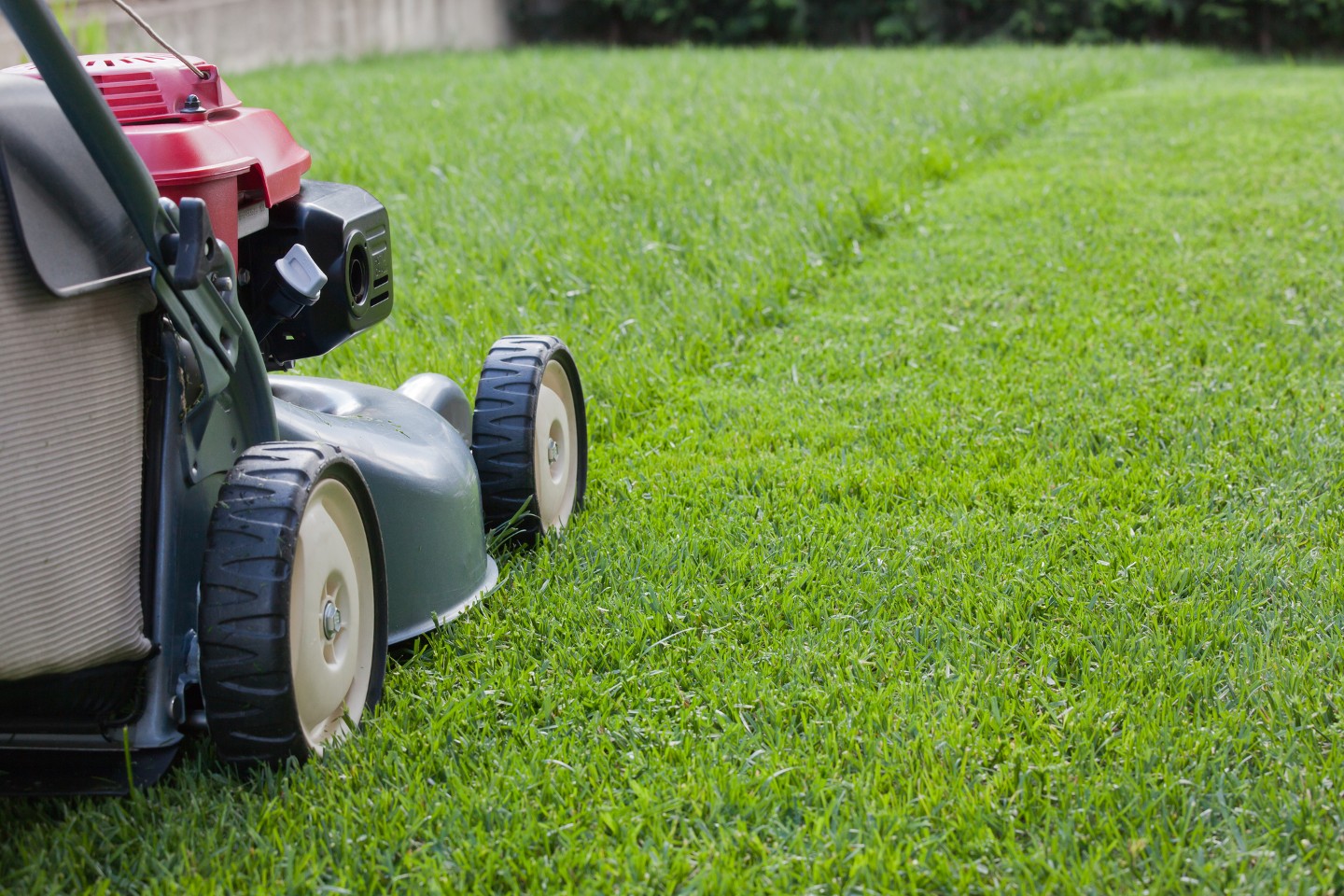
Learn the factors that determine ideal grass height and at what height you should be cutting your lawn.
Every grass has an ideal mowing height. It doesn’t matter whether you’re tending cool-season grass in Minnesota or warm-season turf in Phoenix, your particular type of grass has specific height requirements. Maintain your lawn at the ideal height, and you’ll be rewarded with lush, healthy turf that easily fends off weeds, drought, and disease.
Lawn Mowing Fundamentals
A good rule of thumb — never cut more than the top third of the grass blade off. Otherwise, it could stress the plant and cause unsightly browning.
Forget the lawn-mowing myth that says the shorter you mow grass, the less often you’ll have to cut it, too. That misguided concept lays a foundation for a problem-prone lawn. Grass cut too short is more susceptible to weed invasion, drought, and heat damage.
Let your grass grow too long between cuttings, and you risk creating an ideal habitat for insects like mosquitoes and critters like voles, mice, and snakes. Grass that’s too long is also hard to mow, and the extra-long clippings create more work since they usually need to be raked or bagged.
It’s worth the extra effort to mow a lawn frequently enough to maintain the ideal height. Even during peak growth, you’ll probably only be mowing every five to seven days — at most. Your mowing frequency ultimately depends on your lawn’s ideal height, which varies during the growing season and depends on growing conditions.
Cool-season turf, including fescues and Kentucky bluegrass, grows the most during spring and fall cool temperatures. While specific heights vary, the typical range for cool-season grasses falls between 1 and 4 inches high.
Warm-season turf includes St. Augustine, Bermuda, centipede, and zoysia. These grasses achieve their peak growth when summer hits its stride. Specific mowing heights vary by grass type and can be different for different types of the same grass. For instance, the mowing height for Empire zoysia is 0.75 to 3 inches, while Zenith zoysia thrives when cut to 1.5 inches, and even those ideal heights vary by region.
Best Mowing Height for Warm-Season Grasses
- Bahia: 2.5 to 4 inches
- Bermuda: 0.5 to 2.5 inches
- Buffalo: 1.5 to 4 inches
- Centipede: 1 to 2.5 inches
- Kikuyu grass: 1 to 1.5 inches
- St. Augustine: 1 to 3 inches
- Zoysia: 0.5 to 3 inches
Best Mowing Height for Cool-Season Grasses
- Fine fescue: 1.5 to 4 inches
- Kentucky bluegrass: 0.75 to 3.5 inches
- Perennial ryegrass: 0.75 to 2.5 inches
- Tall fescue: 1.5 to 4 inches
You’ll have to research seasonal exceptions to these guidelines based on your region. To learn about seasonal height shifts, contact your local county extension office, a reputable garden center, or local sod or seed suppliers.
Typical Seasonal Grass Height Variations
- Allow all grasses to grow taller in summer and during drought.
- Mow warm-season turf shorter in spring to remove dead grass blades.
- Mow cool-season grasses shorter for the final fall mowing in snow-prone regions to help prevent snow mold.
- Allow grasses growing in shade to grow taller.
Leave a Reply