
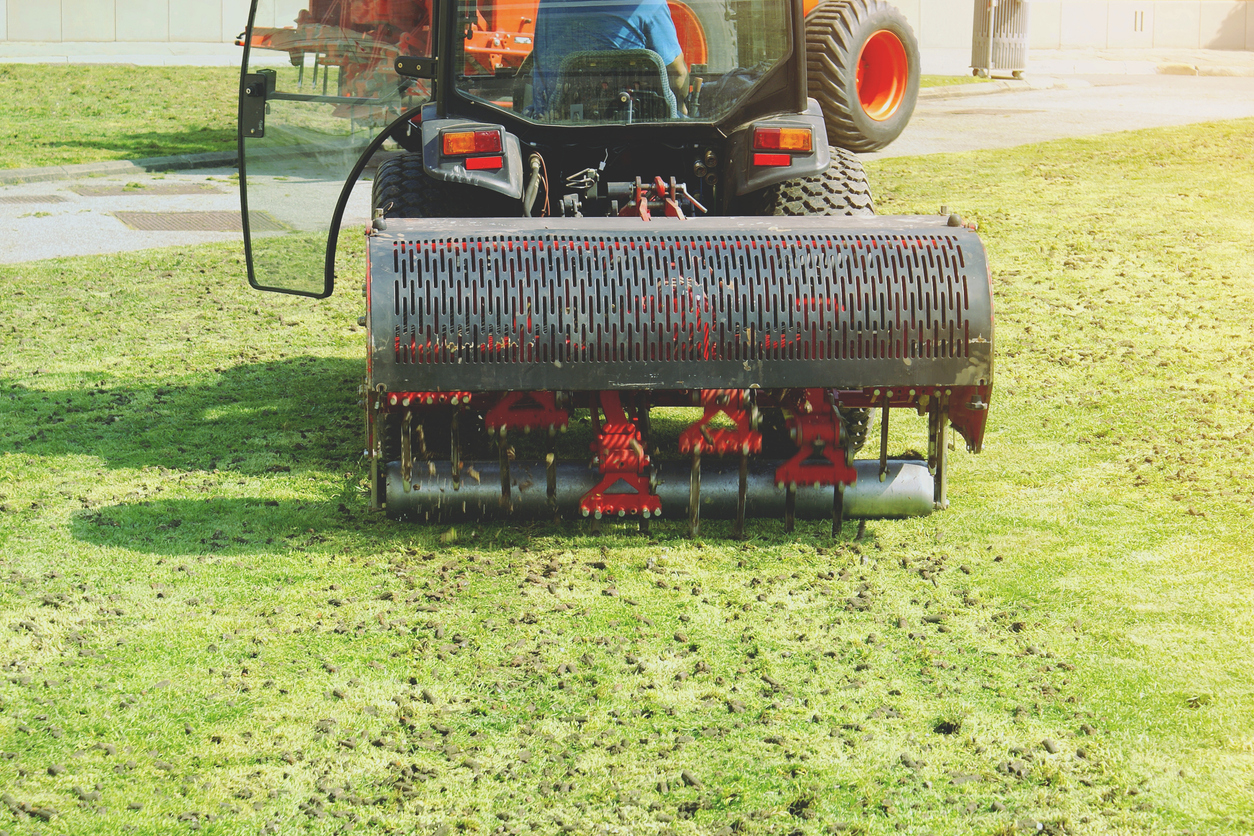
Aerating your lawn is a crucial step in maintaining healthy grass. Core aeration helps loosen compacted soil, allowing nutrients, water, and air to reach your grass’s roots more efficiently. In Ohio, the best times for spring lawn aeration or fall lawn aeration are when your grass is strong enough to handle the process and recover quickly. Skipping aeration can lead to weaker grass, increased soil compaction, and make your lawn more susceptible to pests and diseases.
Why You Shouldn’t Skip Annual Lawn Aeration
Core aeration involves removing small plugs of soil from your lawn to relieve soil compaction and improve nutrient absorption. If you skip this essential service, your grass may suffer. Compacted soil restricts airflow and makes it harder for water and nutrients to penetrate down to the roots, leading to weak growth and leaving your lawn vulnerable to stressors like insect infestations and diseases. Proper aeration ensures your lawn’s roots stay healthy, which leads to a thriving lawn overall.
The Best Time for Lawn Aeration: Spring or Fall?
To get the most benefit from aeration, you should schedule it when your lawn is strong enough to recover quickly. In Ohio, spring lawn aeration is a great choice because it helps your lawn build strength and prepares it for the upcoming hot summer. Meanwhile, fall lawn aeration sets your grass up to thrive during dormancy and emerge stronger for the next growing season.
For optimal results, many homeowners schedule aeration twice a year—once in the spring and again in the fall. This routine creates a lush, green lawn that can withstand stress from environmental changes while other lawns may struggle.
Pair Fall Aeration With Overseeding for the Best Results
To make your lawn even thicker and healthier, consider pairing fall aeration with overseeding. Aeration creates the perfect conditions for seeds to make excellent contact with the soil, ensuring better growth and a denser lawn.
Leave a Reply